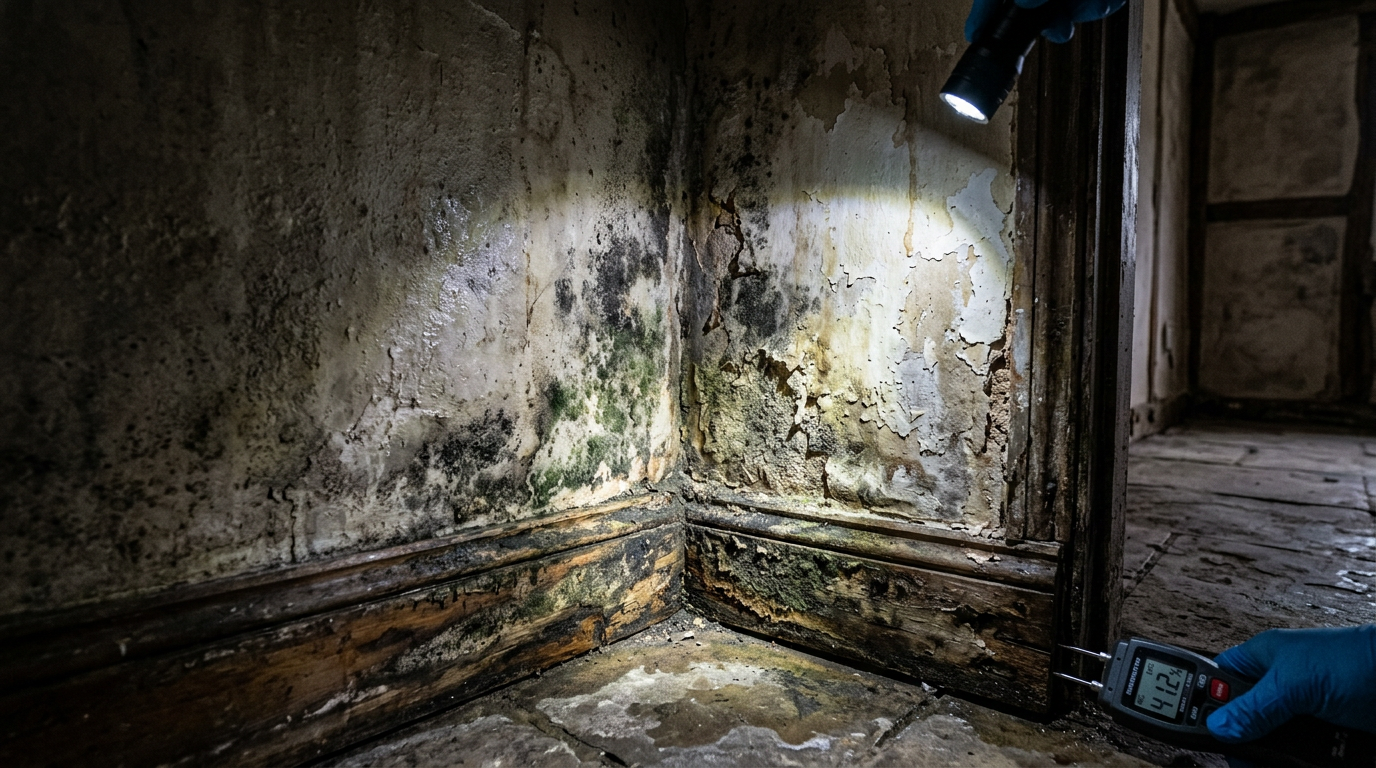
Damp is one of the most common findings in a building survey of an older property in Crowborough and the wider East Sussex area — and it is also one of the most misunderstood. The word "damp" covers a range of completely different conditions, each with different causes, different symptoms and different solutions. Treating the wrong type of damp is not just ineffective — it can actually make things worse.
In this guide, I will walk through the three main types of damp that we regularly encounter in our survey work across East Sussex, Kent and Surrey: rising damp, penetrating damp and condensation. I will explain how to identify each one, what causes it, and what the appropriate remedies look like.
The Three Main Types of Damp
1. Rising Damp
Rising damp is groundwater moving upwards through the pores and capillaries of brickwork or masonry. It is caused by the failure — or absence — of a damp proof course (DPC). The DPC is a horizontal barrier, typically a layer of slate, bitumen felt or engineering brick, installed in the base of external walls to prevent ground moisture from travelling upwards.
Symptoms of rising damp typically include a distinctive tide mark on internal walls, usually up to around one metre above floor level; salting (white crystalline deposits left by evaporating moisture); peeling wallpaper or blown plaster; and musty smells. Rising damp is more common in Victorian and Edwardian properties, where the original DPC may have failed or been bridged.
Important caveat: Rising damp is often misdiagnosed. Many "damp-proofing companies" will tell you that any moisture in a wall is rising damp — because it is the most lucrative problem to solve. A good building surveyor will use a calibrated moisture meter and consider all possible causes before reaching a diagnosis. In our experience, true rising damp is actually less common than it is reported to be.
2. Penetrating Damp
Penetrating damp — also called lateral damp — is caused by water entering a building from outside through defects in the external fabric. Unlike rising damp, it can occur at any height in the building. Common entry points include cracked or porous masonry, failed pointing, defective window surrounds, blocked or leaking gutters and downpipes, damaged roof coverings and failed flashings.
Penetrating damp tends to cause damp patches that are directly related to a source of water above or adjacent to them. The patches often worsen after rain and dry out in dry weather. In solid-wall properties — which are very common in Crowborough's Victorian housing stock — penetrating damp through the wall itself is also possible if the masonry is sufficiently porous.
The good news is that penetrating damp is usually entirely fixable by addressing the source of the water. There is no need for expensive injection treatments — find and fix the defect that is letting the water in.
3. Condensation
Condensation is the most common form of damp in UK properties — and by a significant margin. It occurs when warm, moist air comes into contact with a cold surface, causing water vapour to condense into liquid water. It is most common in winter, when there is a large temperature differential between inside and outside, and in rooms where moisture is generated — kitchens, bathrooms and bedrooms.
The typical signs of condensation include black mould growth (particularly in corners, behind furniture and on cold external walls), streaming windows, and musty smells. Condensation is primarily a lifestyle and ventilation issue — it can usually be addressed through improved ventilation, increased heating and improved insulation, without any structural intervention.
However, condensation in older properties can sometimes indicate inadequate insulation or thermal bridging, which may need to be addressed as part of a broader energy improvement programme.
How We Use Thermal Imaging to Detect Damp
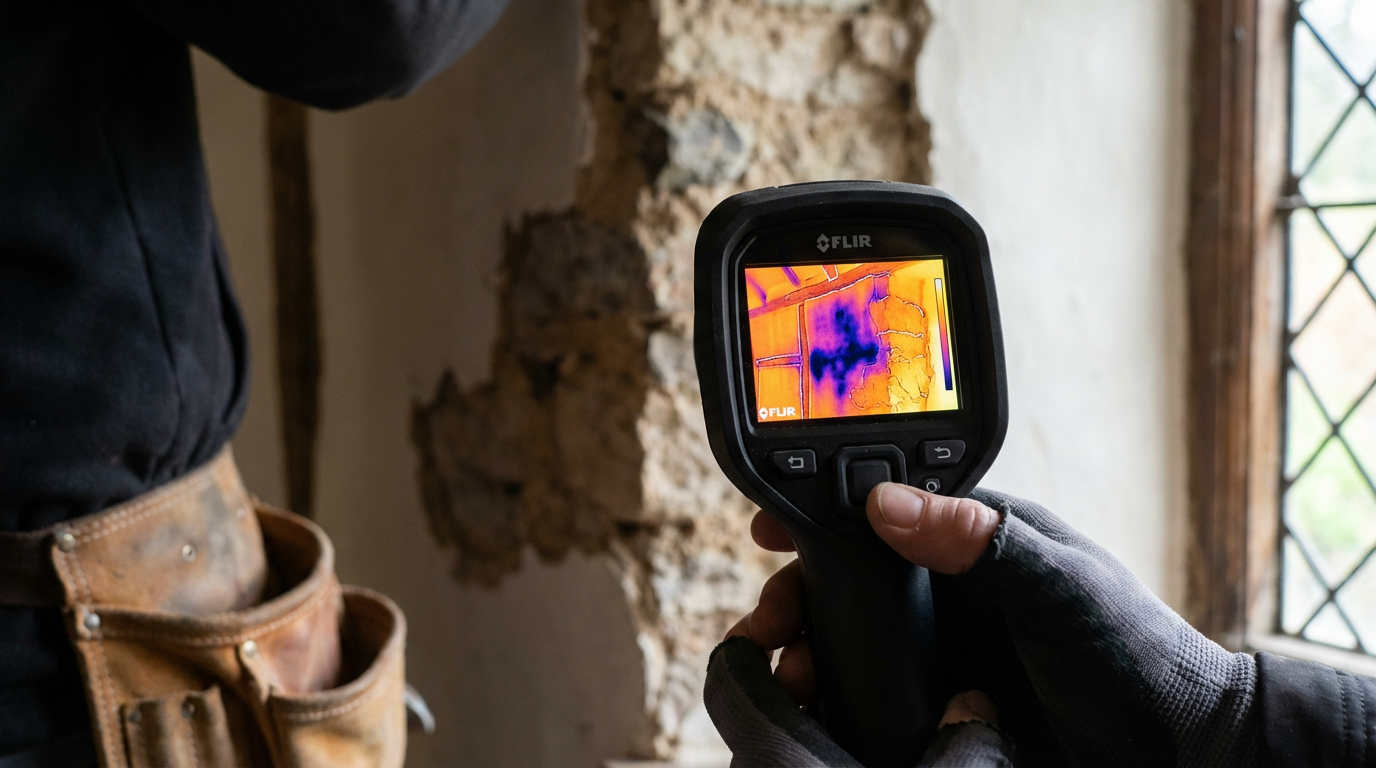
One of the most significant advances in building survey practice in recent years has been the use of thermal imaging cameras. At Crowborough Surveyor, we routinely use thermal imaging as part of our Level 3 building surveys to identify areas of moisture that are not visible to the naked eye.
A thermal camera shows temperature differentials across surfaces — and because water retains heat differently from dry masonry, areas of dampness often show up as distinctly cooler regions in the image. This allows us to map moisture patterns across walls and ceilings with much greater accuracy than moisture meters alone.
What to Do If Your Survey Flags Damp
First, do not panic. Damp is extraordinarily common in older properties — particularly in East Sussex, where the clay soils retain moisture and the housing stock is predominantly Victorian and Edwardian. Finding damp in your survey report does not automatically mean you should pull out of the purchase. It means you need more information.
Here is what we recommend:
- Read the surveyor's comments carefully. We will have given you our assessment of what type of damp it is, how serious it appears, and what further investigation we recommend.
- Commission a specialist report if needed. For significant damp issues, we often recommend a further investigation by a structural engineer or a specialist damp surveyor (not a damp-proofing contractor — there is a conflict of interest there).
- Get cost estimates. Before renegotiating, get at least two quotes for the remedial work. This gives you a factual basis for any price reduction request.
- Use the findings to renegotiate. Damp — particularly penetrating or rising damp — is a legitimate ground for renegotiating the purchase price. Our survey report will support your case. See our guide to renegotiating after a survey for more detail.
Damp FAQs
Concerned About Damp in a Property You Are Buying?
A Level 3 building survey from Crowborough Surveyor will give you a clear, honest assessment — including thermal imaging where relevant. Contact us for a free quote.
Get a Free Quote