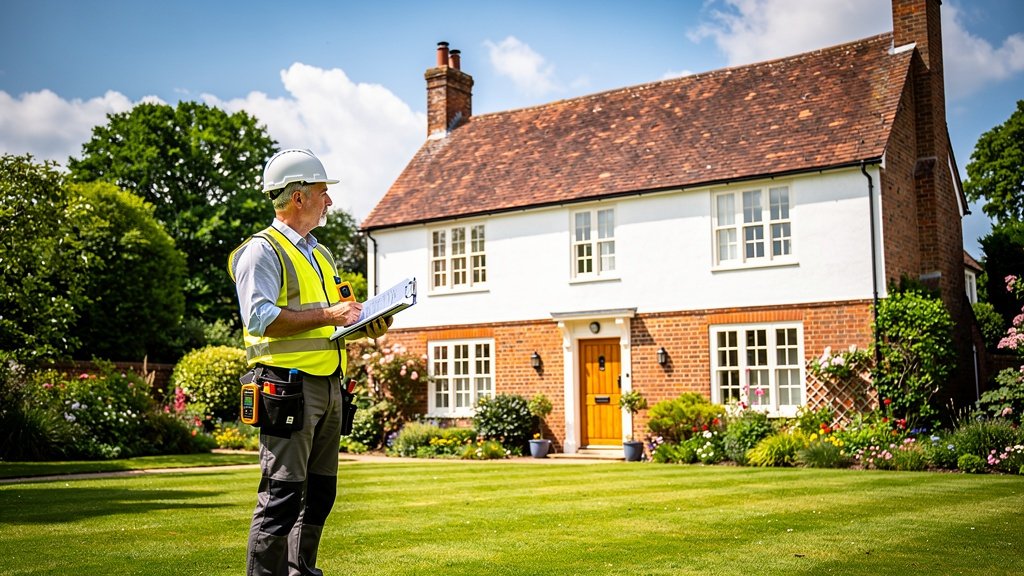
If you're buying a property in Crowborough or anywhere across East Sussex, a Level 3 Building Survey could be the most valuable investment you ever make. Not because surveyors say so — but because the evidence backs it up. In our practice alone, over 60% of Level 3 surveys we carry out identify defects that lead to a price renegotiation, saving buyers an average of between £5,000 and £15,000 on their purchase.
This guide explains exactly what a Level 3 Building Survey is, what it covers, when you should commission one, and what happens after you receive the report. If you're buying a period property anywhere in East Sussex, Kent or Surrey, read this first.
What Is a Level 3 Building Survey?
The Level 3 Building Survey — previously known as a Full Structural Survey or Full Building Survey — is the most detailed and comprehensive property inspection available through RICS-regulated surveyors. It sits at the top of the RICS Home Survey framework, which has three levels:
- Level 1 (Condition Report): Basic traffic-light condition summary. Best for new-builds only.
- Level 2 (HomeBuyer Report): More detail, suitable for standard properties in reasonable condition. See our HomeBuyer Report guide.
- Level 3 (Building Survey): Full, in-depth analysis of structure, fabric, defects and recommendations.
Unlike the HomeBuyer Report, a Level 3 survey is not a standardised template. It is written bespoke for every property inspected, covering all accessible parts of the building in detail. The surveyor describes what they find, explains what it means, and — crucially — gives you an honest view of what it will cost to put right.
What Does a Level 3 Building Survey Cover?
A thorough Level 3 Building Survey will examine every accessible part of the property. Here's what our building surveyors typically cover on inspection:
Structure and Foundations
We assess the structure of the building from the foundations upwards. We look for signs of subsidence, settlement or movement — cracks in walls, doors and windows that stick, uneven floors or out-of-plumb chimney stacks. In East Sussex, particularly around Crowborough and the Weald, expansive clay soils are a major cause of seasonal movement in foundations, and we check for this explicitly.
Roof
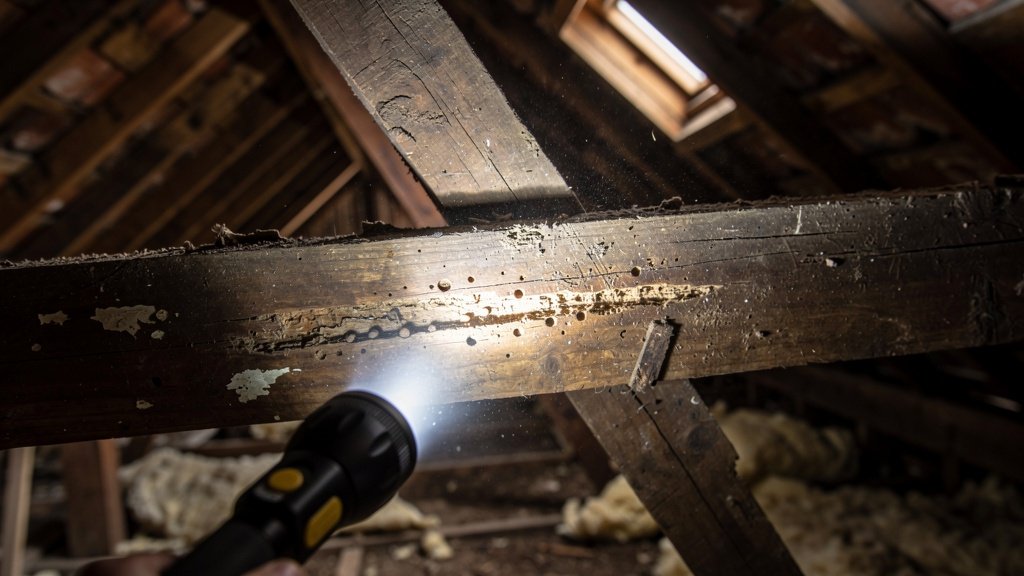
From ground level and from inside the roof space (where access is available), we inspect the roof covering, guttering, flashings, chimney stacks and roof timbers. We look for slipped or missing tiles, deteriorated lead work and — a very common finding in Crowborough's Victorian housing stock — timber decay or woodworm infestation in rafters and purlins.
Walls and Exterior
We assess both external and internal walls. On the exterior, we look at pointing, brickwork, render and window frames. Internally, we assess for damp penetration, thermal bridging and signs of structural movement. We'll always test with a damp meter, and we'll probe suspect timber with a sharp instrument if we have concerns.
Floors
We inspect both suspended timber and solid concrete floors for bounce, sagging, damp and rot. Under suspended timber floors — where access is available — we check ventilation (critical to prevent rot), check for evidence of past flooding and look for evidence of pest infestation.
Services
We comment on the visible condition of plumbing, drainage, heating and electrics. We are not specialists in these services — and we'll say so clearly — but we highlight obvious concerns and recommend specialist investigations where we suspect problems. That damp patch below the bathroom might just be condensation. Or it might be a slowly leaking pipe. We'll tell you which we think it is and why.
Outbuildings and Grounds
Unlike a HomeBuyer Report, a Level 3 survey includes comment on garages, outbuildings, retaining walls, boundary structures and garden features where they are likely to affect the property or incur future expenditure.
When Should You Commission a Level 3 Building Survey?
The short answer: whenever there is any doubt about the condition of a property. More specifically, we recommend a Level 3 Building Survey if:
- The property was built before 1930
- It has been significantly extended or altered
- You have any specific concerns about its condition
- It's a listed building or in a conservation area
- It's an unusual construction type (timber frame, converted barn, etc.)
- It's in a high-risk area for subsidence or flooding
- You plan to carry out renovation or extension work after purchase
- It hasn't been modernised recently
- The property has been vacant for a period
"I was tempted to go with the cheaper HomeBuyer Report — it was £200 less. The surveyor talked me through the property details and suggested a Level 3 given its age and construction type. The survey found active woodworm in the roof timbers and signs of ongoing movement in the rear wall. I negotiated £12,500 off the asking price. Best £650 I ever spent."
What Does a Level 3 Building Survey Report Look Like?
Our Level 3 reports are written in plain English, structured clearly, and accompanied by photographs of every significant finding. They include:
- An executive summary highlighting the most important points
- A section-by-section description of the property and its condition
- Photographs illustrating defects and areas of concern
- Condition ratings (where helpful) with explanations in plain terms
- Indicative repair cost estimates for significant defects
- Prioritised recommendations: what needs urgent attention vs what can wait
- Recommendations for further specialist investigations (e.g. structural engineer, electrician)
- A summary of legal and conveyancing matters for your solicitor's attention
After you receive your report, we call you personally to discuss the findings. We want you to understand what we found, what it means for you, and how to use the information — whether that's renegotiating the price, requesting remedial works or simply proceeding with full knowledge of what you're taking on.
Level 3 Survey vs HomeBuyer Report: Key Differences
We are often asked directly: "Do I really need the full survey?" Here's the honest answer. If the property is a post-1990 house in good condition and nothing obvious concerns you, a HomeBuyer Report may well be sufficient. But in our experience of surveying properties across East Sussex and Kent, the vast majority of pre-1970 properties benefit from a Level 3. The cost difference is modest — typically £150–£250 — and the difference in protection is significant.
For a detailed comparison, see our article: RICS HomeBuyer Report vs Level 3 Survey: Which Do You Need?
How Much Does a Level 3 Building Survey Cost in East Sussex?
Survey fees vary based on the size, age, type and location of the property. For a typical three-to-four-bedroom property in Crowborough or the surrounding East Sussex area, a Level 3 Building Survey from Crowborough Surveyor typically ranges from around £600 to £900. Larger, more complex or more remote properties may cost more.
We always provide fixed, transparent fees with no hidden extras. Contact us for a personalised quote — we usually respond within two working hours.
What Happens After the Survey?
Once you receive your report, you have several options depending on what the survey found:
- Proceed as planned: If the survey finds only minor issues consistent with the age and price of the property, you may decide to proceed. You'll still benefit from knowing exactly what maintenance is needed post-purchase.
- Renegotiate on price: If the survey reveals significant defects, you can use the report to negotiate a reduction in the asking price — essentially asking the vendor to contribute to the cost of repairs. This is the most common outcome where defects are found.
- Request repairs: You can ask the vendor to carry out specific remedial works before exchange of contracts. We can advise on what to ask for and whether it's a reasonable request.
- Commission specialist reports: Where the survey recommends further investigation — by a structural engineer, drainage specialist or electrician, for example — we can advise on who to instruct and what to ask them to look at.
- Walk away: Occasionally — rarely, but sometimes — a survey reveals problems so serious that the right advice is to walk away. We'll tell you honestly if we think that's the case. It's better to lose your legal fees than to buy a money pit.
Level 3 Surveys for Properties in the High Weald, East Sussex
Crowborough and the surrounding High Weald area present specific surveying challenges that make a Level 3 survey particularly important. The region has a high proportion of pre-1914 housing stock, significant numbers of timber-framed and listed buildings, and a geology characterised by alternating sandstone and clay layers — all of which contribute to a higher-than-average incidence of structural movement and moisture-related defects.
We know this area intimately. Our surveyors have inspected hundreds of properties in Crowborough, Tunbridge Wells, Uckfield, Heathfield, Wadhurst and the surrounding villages. We know what the common issues are here, and we know how to find them.
Frequently Asked Questions
Yes. There's no rule that says you must wait for an accepted offer. If you're buying at auction or want to make a more informed offer, you can commission a survey at any stage. We'll arrange access with the vendor or agent.
On-site time is typically 3–5 hours for an average property, longer for larger or more complex buildings. We aim to deliver written reports within 3–5 working days of the inspection.
Yes. Japanese knotweed is an invasive plant that can cause significant structural damage and complicate mortgage lending. We check for it as standard during our external inspection and will flag it clearly if found or suspected.
Not as standard — but we can add a market valuation to your Level 3 survey for an additional fee. If you need a standalone property valuation, we offer that as a separate service.
Ready to Book a Level 3 Building Survey in Crowborough?
If you're buying a property in Crowborough, Tunbridge Wells, Uckfield or anywhere across East Sussex and Kent, our team is ready to help. Get in touch for a free, no-obligation quote. We aim to respond within two working hours.