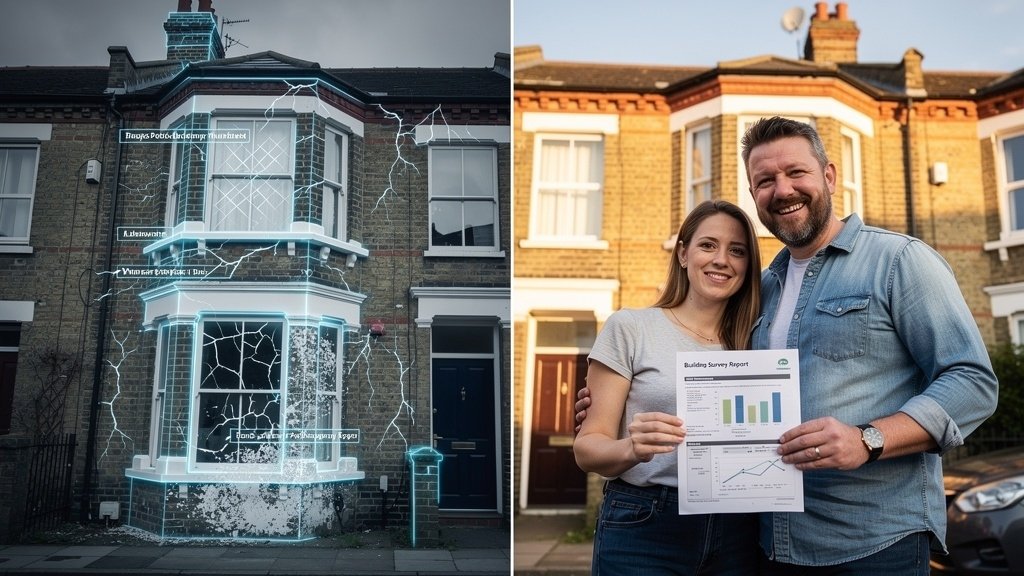
After carrying out hundreds of building surveys across Crowborough and the wider East Sussex area, we have built up a clear picture of the problems that affect local properties most frequently. East Sussex has a fascinating and varied housing stock — from medieval timber-framed farmhouses in the High Weald to Edwardian villas in Crowborough and post-war estates in Uckfield. Each era of construction brings its own set of vulnerabilities, and knowing what to look for can save you thousands of pounds.
In this article, we share the five defects our building surveyors in Crowborough encounter most often — and, crucially, what you can do about them before they become serious problems.
Defect #1: Damp — Rising, Penetrating and Condensation
Damp in All Its Forms
Damp is by far the most common defect we find in East Sussex properties — particularly in Victorian, Edwardian and inter-war buildings that make up such a large proportion of the local housing stock. We encounter three main types: rising damp, penetrating damp and condensation.
Rising damp occurs when groundwater is drawn upwards through masonry walls by capillary action. Properly functioning damp-proof courses (DPCs) prevent this, but older or damaged DPCs often fail. Signs include tidemark staining on lower walls, peeling wallpaper, salt deposits (efflorescence) and a musty smell at low level.
Penetrating damp is caused by water entering the building envelope — through cracked render, failed pointing, blocked gutters, defective flashing or poorly detailed window reveals. It often presents as damp patches that correspond to specific external defects. This is the more common form in East Sussex and is usually cheaper to fix once the source is identified.
Condensation is the most misdiagnosed form of damp. It occurs when warm, moisture-laden air meets cold surfaces and deposits moisture. It is extremely common in older properties with solid walls and limited ventilation. Black mould growth, typically in corners and on external walls, is a telltale sign.
What to do: Commission a thorough investigation before spending money on treatment. Many "damp specialists" will diagnose rising damp and recommend expensive chemical injection DPCs when the real cause is penetrating damp or condensation. An independent survey from a building surveyor will give you an unbiased diagnosis.
Defect #2: Roof Defects and Timber Decay
Roof Structure and Covering Problems
Roof defects are the second most common issue we flag in East Sussex building surveys. The region has a high proportion of properties with natural slate roofs (Welsh slate and Horsham stone), clay plain tiles and, in some rural areas, clay peg tiles. All of these age and deteriorate at different rates, and many roofs in the area are well past their expected service life.
In the roof space itself, we frequently find timber decay — either wet rot in rafters and purlins where rain has been penetrating for years, or woodworm (common furniture beetle) attack in older timbers. Some of the older properties in the Crowborough and High Weald area have roof timbers dating back centuries, and while historical woodworm attack is often no longer active, fresh infestations do occur and require treatment.
We also regularly encounter inadequate or missing insulation in roof spaces, failed lead flashings at chimney stacks and abutments, and blocked or failing valley gutters — all of which can allow water ingress that goes undetected for years.
What to do: Have the roof space inspected as part of any building survey. A Level 3 survey will include a thorough inspection of the roof void, not just a visual check from the hatch. Caught early, roof timber decay is relatively inexpensive to address; left untreated, it can threaten the structural integrity of the roof.
Defect #3: Structural Movement and Cracking
Subsidence, Settlement and Structural Cracking
East Sussex sits partly on London Clay and Weald Clay — both shrinkable soils that can cause significant ground movement, particularly during dry summers when clay desiccates and contracts. This is a known issue in parts of Crowborough, Uckfield and the wider High Weald area, and it is something our surveyors look for carefully in every inspection.
Subsidence occurs when the ground beneath the foundations sinks or shifts, causing the foundations — and the structure above — to move. The tell-tale signs are diagonal cracking, often at corners of window and door openings, cracks that are wider at the top than the bottom, and doors or windows that have started to stick or jam.
However, not all cracking is caused by subsidence. Settlement (the gradual bedding-in of a building over time) is extremely common and usually benign. Thermal movement, lintel failure and mortar deterioration can all produce cracking that looks alarming but is relatively straightforward to repair. A building surveyor can distinguish between these causes and advise on the appropriate response.
What to do: Never assume cracking is just cosmetic without getting professional advice. A Level 3 Building Survey will assess the pattern, nature and likely cause of cracking, and recommend specialist investigation where warranted. Early diagnosis is key — active subsidence can be halted with the right intervention.
Defect #4: Poorly Executed Extensions and Alterations
DIY and Unpermitted Building Works
One of the most consistent findings in our East Sussex building surveys is evidence of extensions, alterations and conversions that were carried out without proper building regulations approval, or that were executed by unqualified builders to a poor standard. This is particularly prevalent in properties that have been extended or modified multiple times over the decades.
Common problems we find include: flat roofs on extensions with inadequate falls, poor drainage details and failing felt or EPDM coverings; loft conversions with inadequate structural support, missing fire doors and non-compliant stair angles; conservatories with cracked polycarbonate roofing and failed seals; and knocked-through walls where the structural beam installed is undersized or the bearing length is insufficient.
We also frequently encounter missing building regulations certificates for work that clearly required them — a significant issue for buyers, as lenders may require indemnity insurance or retrospective approval before they will release mortgage funds.
What to do: Before you exchange, check whether all extensions and alterations have the relevant planning permission and building regulations approval. Your surveyor will flag areas of concern, and your solicitor should check the legal documentation. Where certificates are missing, specialist indemnity insurance is usually available.
Defect #5: Drainage Problems and Blocked Gullies
Surface Water Drainage and Foul Drainage Issues
Drainage is one of the most overlooked aspects of property condition, yet poor drainage can cause damp, structural damage and, in worst cases, sewage backing up into the property. In East Sussex, drainage issues are particularly common in properties with mature gardens where tree roots have infiltrated underground pipes, and in older properties where the original drainage systems were designed to standards very different from those required today.
We frequently find blocked or cracked underground drains, poorly positioned or non-existent soakaways, flat or negative-fall surface water channels that pool water against the building, and in some rural properties, inadequate or failing septic tanks and cesspools. The latter can be both expensive to remediate and subject to Environment Agency regulations.
A visual inspection of drainage is included in a Level 3 Building Survey, but where there are specific concerns, we recommend a CCTV drain survey to provide a full picture of the condition of underground pipes.
What to do: Ensure surface water channels are cleared and discharging freely away from the building. If the property has a private drainage system, check the last emptying record and check for any Environment Agency permits. Where underground drainage is a concern, budget for a CCTV survey as part of your pre-purchase due diligence.
How to Protect Yourself as a Buyer
The good news about all five of these common defects is that they are identifiable before you exchange. A properly conducted Level 3 Building Survey by an experienced building surveyor will flag every one of them — giving you the information you need to negotiate, plan for repairs or, in serious cases, walk away from a purchase that could become a financial nightmare.
In our experience, buyers who commission a thorough survey and act on its findings consistently get better outcomes than those who skip the process or rely on a basic mortgage valuation. The survey fee is almost always repaid many times over — either directly through price negotiations or simply through the peace of mind that comes from knowing exactly what you are buying.
"The survey flagged a problem with the flat roof extension that the estate agent had completely glossed over. We used the report to knock £6,500 off the price and had the roof replaced before we even moved in. Best money we ever spent."
— Michael T., Uckfield, East Sussex
Why Local Knowledge Matters
All of the defects described above can occur anywhere in the country, but their frequency and severity in East Sussex is shaped by local factors — the clay soils of the High Weald, the age and construction type of the housing stock, the damp climate of the South East, and the prevalence of rural properties with private drainage systems. A surveyor who works in the area every day understands these local nuances in a way that a surveyor parachuted in from another region simply cannot.
At Crowborough Surveyor, our team has built up years of experience surveying properties across East Sussex, Kent and Surrey. We know the housing stock, the ground conditions and the local planning context intimately. That local knowledge is what makes our surveys not just thorough, but genuinely useful.
Get a Survey Before You Buy
Our Level 3 Building Surveys and HomeBuyer Reports cover all the defects described in this article and much more. Fixed price, fast turnaround, jargon-free reports and a personal follow-up call. Contact us for a free quote today.
Frequently Asked Questions
Are these defects covered by a standard HomeBuyer Report?
A RICS Level 2 HomeBuyer Report will flag the visible symptoms of these defects where they are apparent during an inspection. However, a Level 3 Building Survey will go deeper — investigating the likely cause, assessing severity and providing guidance on remedial works. For older properties or those showing any signs of the defects above, a Level 3 is the better choice.
What is the most expensive defect to fix?
Structural movement — particularly active subsidence — tends to produce the largest repair bills. Underpinning can cost anywhere from £10,000 to £50,000+ depending on the extent of movement and the foundation solution required. Roof replacement (structure and coverings) for a large period property is also a significant expense, typically £15,000–£30,000.
Can I negotiate on price if a survey reveals defects?
Absolutely — and many of our clients do. A detailed survey report, with photographs and cost guidance, is a powerful negotiating tool. Vendors who know their buyer has a professional report identifying specific defects are usually willing to reduce the price or agree to remedial works before exchange. This is one of the most tangible financial benefits of commissioning a thorough survey.
How do I find a reliable building surveyor in East Sussex?
Look for RICS accreditation (MRICS or FRICS), genuine local experience, clear fee structures and good client reviews. Avoid surveyors who turn around reports in 24 hours — a thorough Level 3 survey of a period property simply cannot be written properly in that time. At Crowborough Surveyor, we aim for 3–5 working days and always follow up with a personal call.
Conclusion
Damp, roof defects, structural movement, poorly executed alterations and drainage problems — these are the five defects that dominate the surveys we carry out across Crowborough and East Sussex. None of them needs to be a dealbreaker, but all of them need to be understood, quantified and factored into your purchase decision. The right building survey, carried out by the right surveyor, gives you exactly that.