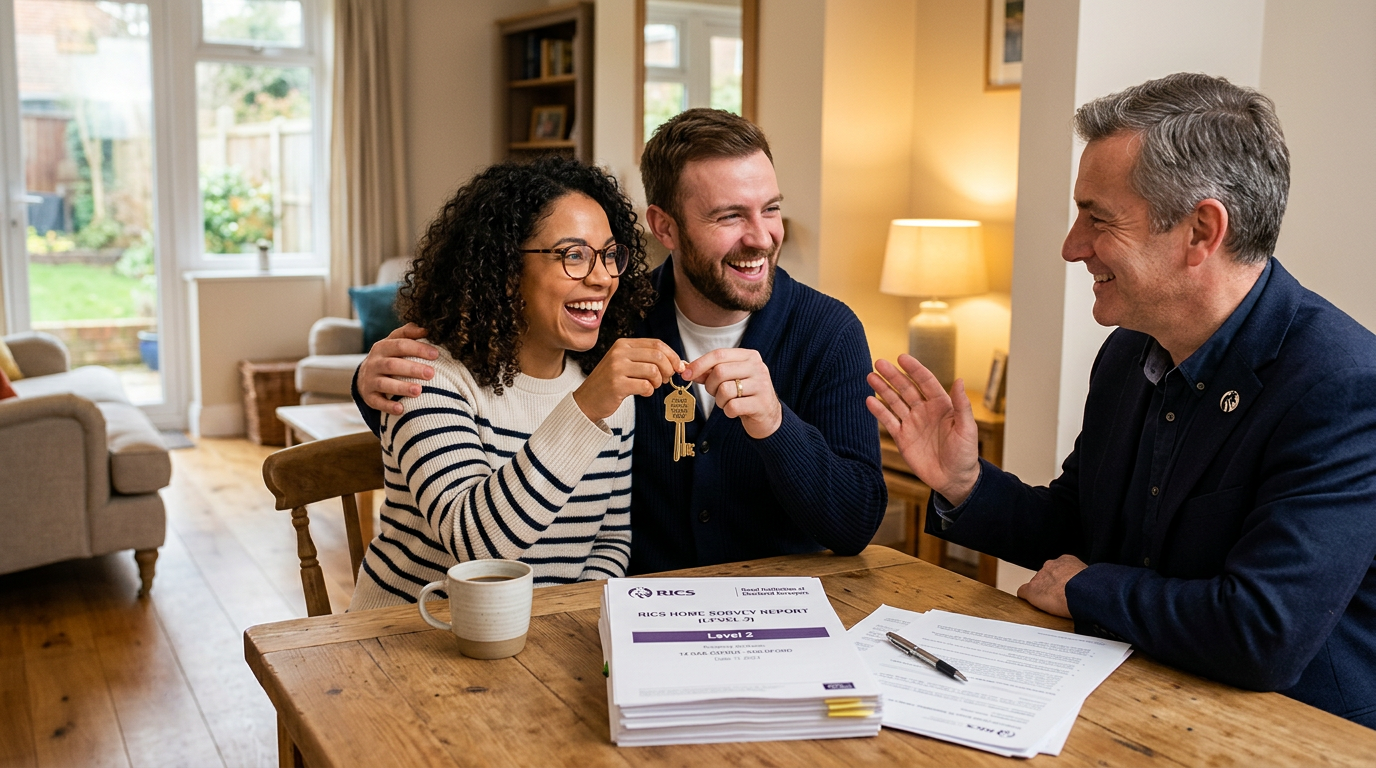
Buying your first home in Crowborough — or anywhere in East Sussex — is exciting. It can also be overwhelming. One of the decisions you will need to make is which survey to commission, and for many first-time buyers, the RICS homebuyer report (now formally called the RICS Home Survey Level 2) is the natural starting point.
But what exactly does it cover? What does it not cover? And how do you actually use the report once you have it? As a RICS surveyor and registered valuer, I have produced hundreds of homebuyer reports across East Sussex and Kent. Let me walk you through everything you need to know.
What Is a RICS Homebuyer Report?
A RICS homebuyer report is a standardised survey report produced by a RICS surveyor after a visual inspection of a residential property. It follows a set RICS format and uses a clear condition rating system to describe the state of different elements of the building.
It was redesigned in 2021 as the "RICS Home Survey Level 2" to bring it in line with the updated RICS Home Survey Standard. The format is cleaner and more accessible than the old HomeBuyer Report, and the advice is more direct. But the substance is broadly similar — and it remains the most widely used survey for conventional residential property purchases in England and Wales.
Understanding the Condition Rating System
At the heart of the homebuyer report is the condition rating system. Every element of the property — from the roof to the drains — is assigned one of three ratings:
A Condition Rating 3 should never be ignored. It does not necessarily mean the property is unsalvageable — but it does mean you need to understand what you are taking on, get further specialist advice, and factor the repair costs into your negotiation.
What Does a Homebuyer Report Cover?
The surveyor will inspect all visible and accessible elements of the property, including:
- Roof: Covering, guttering, flashings and chimney stacks (viewed from ground level and from within the roof space if accessible)
- External walls, windows and doors: Condition, evidence of movement, damp penetration, timber decay
- Internal walls, floors and ceilings: Evidence of cracking, damp, settlement or other defects
- Roof structure: Via loft access if available — condition of timbers, insulation, evidence of leaks
- Services: A brief visual assessment of heating, plumbing and electrical installations (though these are not tested)
- Grounds and outbuildings: Visible elements of the garden, boundaries, garages and outbuildings
What Does It Not Cover?
This is just as important. A homebuyer report is a visual inspection — it does not involve lifting floorboards, opening up walls, testing services, or investigating behind furnishings. If something is not visible, it will not be reported on.
It also does not provide the level of detail found in a Level 3 building survey — there are no cost estimates for repairs, no in-depth investigation of complex structural issues, and no specialist reports on things like drainage, structural engineering or environmental hazards.
This is why we always caution buyers of older or more complex properties against relying on a Level 2 survey alone. A 1900s terraced house in Crowborough might pass a surface-level Level 2 inspection but reveal significant issues under a more rigorous Level 3 investigation.
Does It Include a Valuation?
The RICS Home Survey Level 2 can be commissioned with or without a market valuation. If you choose the version with a valuation (the "Survey and Valuation"), you will receive an independent opinion of the market value of the property based on comparable evidence — which is separate from and independent of the estate agent's asking price and the mortgage lender's valuation.
This can be genuinely useful, especially if you suspect the property is overpriced or if survey findings give you grounds to renegotiate. Many of our clients at Crowborough Surveyor use the valuation as an additional negotiating tool on top of any defects identified.
How to Use Your Homebuyer Report
Here is something we tell every client: the report landing in your inbox is the beginning of the process, not the end. Read it carefully. Pay particular attention to any Condition 3 ratings. Note the legal issues flagged in the "Issues for your legal advisers" section — these sometimes contain important information about boundaries, restrictions or planning history that your solicitor needs to know about.
If there are Condition 3 issues, consider commissioning specialist reports — for example, a structural engineer's report if there is significant cracking, or a damp specialist if rising damp is flagged. Use the findings to renegotiate if appropriate. And ring your surveyor — all of our reports at Crowborough Surveyor come with a free follow-up call to discuss the findings.
"I always tell clients: I am not here to scare you off a purchase. I am here to make sure you go in with your eyes open. A good report should inform your decision — not make it for you." — Sarah Pemberton, Senior Surveyor & Valuer
How Much Does a Homebuyer Report Cost in Crowborough?
Survey fees vary depending on the size and value of the property. As a general guide for the Crowborough area, homebuyer reports start from around £400–£600 for a typical two or three-bedroom property. Adding a valuation typically adds £100–£200 to this figure.
This might seem like a significant cost on top of an already expensive purchase — but consider: we routinely help clients identify defects that allow them to renegotiate thousands of pounds off the purchase price. The survey pays for itself many times over in the majority of cases.
FAQs: RICS Homebuyer Reports
Ready to Book Your Homebuyer Report?
We cover Crowborough and the surrounding area of East Sussex and Kent. Get a free, fixed-fee quote within one working day.
Get a Free QuoteRelated reading: Which Survey Do I Need? · Our Homebuyer Report Service · Renegotiating After a Survey · Damp in Older Homes