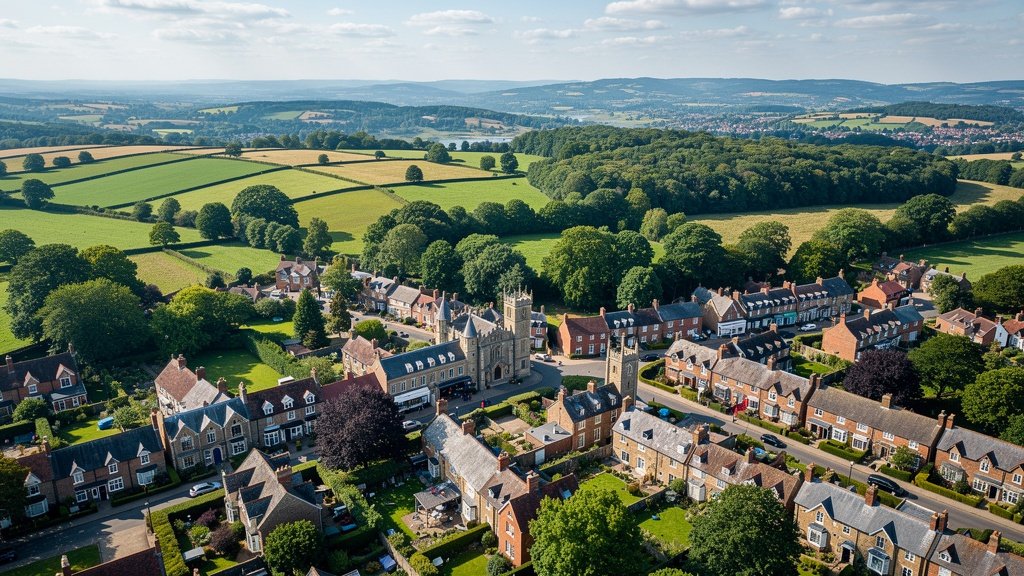
Crowborough is one of those places that people discover by accident and end up falling in love with. The highest town in East Sussex, perched above the Ashdown Forest at the meeting point of three counties, it offers a rare combination: excellent schools, strong community, easy rail access to London and some genuinely beautiful countryside on the doorstep. It's no surprise that the property market has remained resilient even through challenging times nationally.
But as a building surveyor who has lived and worked here for over 15 years, I want to give you the honest picture — the things the estate agents won't tell you, the local knowledge that only comes from inspecting hundreds of properties in the town and its surroundings. Consider this the surveyor's guide to buying in Crowborough.
Crowborough's Property Market: An Overview
Crowborough sits in the Wealden district of East Sussex, about 10 miles south of Tunbridge Wells and 14 miles from Uckfield. The town grew substantially in the late Victorian and Edwardian periods — Arthur Conan Doyle was among its most famous residents — and much of its housing stock dates from that era. The town centre and older residential streets are dominated by Victorian and Edwardian terraces, semis and detached houses, many of which retain original character features.
The outlying areas — Jarvis Brook, Eridge, Rotherfield, Mark Cross — offer a mix of period properties and more modern development. New housing estates have been built on the town's fringes over recent decades, broadening the mix of available property types considerably.
Who Buys in Crowborough?
The town attracts a wide range of buyers, but a few profiles are particularly common:
- London commuters: Crowborough is about 1 hour 10 minutes from London Bridge by rail. For buyers priced out of Surrey and West Kent, it offers more space for the money — a consistent draw.
- Families: The town has several well-regarded schools, a strong community feel and easy access to green space. Family homes sell quickly here.
- Downsizers: Many long-term East Sussex residents moving to something smaller find Crowborough's blend of services and countryside hard to resist.
- Lifestyle buyers: People seeking a slower pace, proximity to the Ashdown Forest and the character of an Edwardian market town.
The Housing Stock: What You're Likely to Find
Understanding the types of properties in Crowborough helps you make better decisions about which surveys are most appropriate.
Victorian and Edwardian Period Properties (1880–1914)
These form the core of Crowborough's most sought-after housing. Typically solid brick construction with slate roofs, timber sash windows, suspended timber floors over a ventilated void, and no cavity in the walls. Beautiful properties with real character — but requiring careful inspection. Common issues include:
- Damp penetration through deteriorated pointing or failed slate DPC
- Timber decay in roof structures, particularly where ventilation is inadequate
- Structural movement associated with expansive clay subsoil
- Deteriorated original services — old wiring, cast iron drainage, original plumbing
- Poorly executed 20th-century extensions or alterations
For any of these properties, we strongly recommend a Level 3 Building Survey.
Inter-War Housing (1919–1939)
The inter-war period saw significant housebuilding in Crowborough, particularly the semi-detached houses that characterise many of the town's residential streets. These properties introduced the cavity wall — a significant improvement over solid Victorian masonry — but often used lower-quality materials and construction than their predecessors. Common issues include wall tie failure in older cavity walls, deteriorated timber frames and some early issues with concrete roof tiles.
Post-War and Modern Properties (1945 onwards)
The town's later development includes a range of post-war housing types, from 1950s and 1960s local authority-style housing to 1980s and 1990s private estates and more recent new-builds. Modern properties generally require less investigation, and a HomeBuyer Report is usually appropriate. However, properties from the 1960s–1980s may have specific issues including large-panel system construction (rare but present in the area), early cavity fill insulation that has deteriorated, and flat-roofed extensions at or beyond the end of their service life.
Ground Conditions: The Surveyor's Perspective
One thing that distinguishes surveying in Crowborough from many other towns is the varied and sometimes challenging ground conditions beneath the town. Understanding this is important for any buyer.
Sandstone Areas
Much of central Crowborough is underlain by Ashdown Beds sandstone — a relatively stable foundation material that provides good bearing conditions. Properties on sandstone generally have fewer foundation problems, all other things being equal.
Weald Clay Areas
The lower-lying parts of Crowborough — particularly around Jarvis Brook and in the valley areas to the south and west — sit on Weald Clay. This is an expansive soil that swells when wet and shrinks when dry. The result is seasonal movement in foundations: properties literally move up and down with the seasons. Most well-built Victorian properties on clay have adapted to this over 100+ years and are stable — but any change in conditions (prolonged drought, nearby tree root activity, altered drainage) can restart movement. We always check for clay-related movement explicitly when surveying in these areas.
Trees: The Hidden Risk
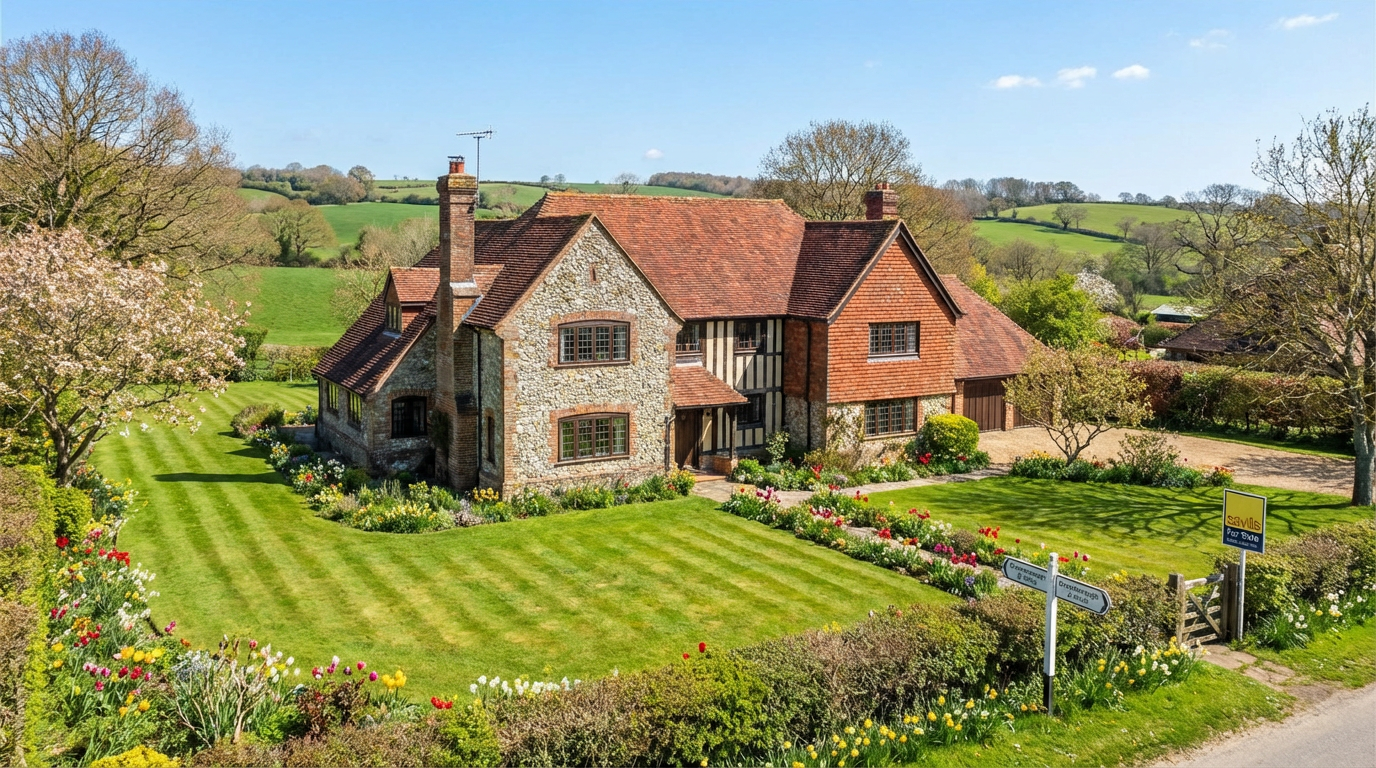
Crowborough has a large number of mature trees — in gardens, on streets and bordering the Ashdown Forest. Trees are wonderful. They are also a source of significant risk to properties on clay soils. Tree roots extract moisture from the soil, causing it to shrink. This can trigger subsidence in foundations. If you're buying a property with large trees within 15 metres — particularly species like oak, poplar, elm or willow — you should discuss this with your surveyor. We will always comment on trees in proximity to the property and their potential risk to foundations.
Planning and Conservation
Parts of Crowborough are within the High Weald Area of Outstanding Natural Beauty, and some properties are listed or within conservation areas. This affects what works you can carry out without planning permission and how those works must be done. Before buying a property in one of these areas, check with your solicitor and surveyor that any existing extensions or alterations have the correct consents. We regularly find unauthorised works on properties in sensitive areas — these can complicate your mortgage and cause difficulties when you come to sell.
What Our Surveys Find Most Often in Crowborough
After hundreds of surveys in the town, here are the defects we identify most frequently:
- Damp — penetrating and rising: Present in some form in the majority of pre-1930 properties. Usually manageable, rarely catastrophic. See our guide to damp in Victorian homes for more detail.
- Structural movement: Crack patterns consistent with clay shrinkage in lower-lying properties. Usually historic and stable, but always requires careful assessment.
- Roof condition: Many properties still have their original slate or clay tile roofs — some in excellent condition, some past their service life. Flat roofs on extensions are particularly common and often require replacement.
- Timber decay and woodworm: Common in roof spaces, around windows and in under-floor areas with poor ventilation.
- Electrical rewiring required: Many older properties have original wiring that is well past its safe service life and requires a full rewire.
Our Local Tip: Don't Underestimate the Extensions
If there's one thing we see again and again in Crowborough properties, it's extensions that were built to a lower standard than the original house. A rear kitchen extension added in the 1970s or 1980s — common in virtually every Victorian terrace in the town — may have a flat roof that is failing, a foundation that is insufficiently deep for local ground conditions, or a connection to the original house that has cracked and opened up. We always pay particular attention to extensions and their junctions with the original building.
Frequently Asked Questions
In our experience, yes. Crowborough has strong fundamentals — good schools, excellent transport links for a rural town, beautiful surroundings and a genuine community feel. Property values have generally held up well historically. As with any property purchase, the key is buying the right property at the right price with eyes fully open — which is exactly what a good building survey helps you do.
There are a number of listed buildings in and around Crowborough, mostly in the surrounding villages and rural areas. If you're buying a listed property, it's particularly important to commission a thorough survey — listed building consent is required for many types of work, and unauthorised alterations by previous owners can create significant problems. Our team has experience with listed property surveys in East Sussex. Contact us to discuss.
Crowborough is served by Buxted and Crowborough stations on the Uckfield branch line, with trains to London Bridge in approximately 1 hour 10 minutes. The A26 provides good road connections to Tunbridge Wells (10 miles north) and Uckfield (8 miles south). The M25 is accessible via the A21 through Tunbridge Wells.