
Buying your first home in Crowborough or anywhere across East Sussex is one of life's genuinely exciting moments. The viewings, the offer, the moment the estate agent calls to say it's been accepted. It's brilliant. But somewhere between that phone call and exchange of contracts, a lot of first-time buyers make a decision they later regret: skipping the survey to save money.
Let me tell you about Sarah. She bought a terraced house in Crowborough without a survey. Not because she was reckless — she simply didn't realise how important one was, and nobody properly explained it to her. Her mortgage valuation said the property was worth what she was paying, and she took that as reassurance that it was fine. Eighteen months later, after discovering rising damp throughout the ground floor and a failing flat roof extension, she was staring at a £22,000 repair bill.
Sarah's story is not unusual. We hear versions of it every year. This guide is for every first-time buyer who wants to avoid it.
Why a Mortgage Valuation Is Not a Survey
This is the most important thing to understand. When your mortgage lender carries out a valuation on the property you're buying, they are doing it for themselves — not for you. They want to know whether the property is adequate security for their loan. They are not looking after your interests.
A mortgage valuation typically takes around 30 minutes. The valuer walks through the property, notes the basic facts, and confirms it is worth roughly what you're paying. They are not required to identify defects, test for damp, inspect the roof space or comment on the condition of the structure.
A proper building survey — carried out by a building surveyor acting for you — is an entirely different thing. It is thorough, independent and focused entirely on identifying anything that might affect your decision to buy or the price you should pay.
What Can Go Wrong Without a Survey?
Here are the most common issues we find when buyers commission a proper survey on a Crowborough or East Sussex property they're about to purchase:
Damp and Moisture Problems
Damp is by far the most common defect in older properties across East Sussex and Kent. It comes in several forms — rising damp, penetrating damp and condensation — and each requires different treatment. Vendors and estate agents sometimes redecorate over damp patches before viewings. Without a survey, you'd never know. With one, you'll see the damp meter readings and understand exactly what you're dealing with before you exchange.
Structural Movement and Cracking
East Sussex sits on a complex geology — sandstone in some areas, expanding Weald Clay in others. Properties in lower-lying areas of Crowborough and around Jarvis Brook can be particularly susceptible to seasonal foundation movement. Not all cracks are serious, but some are. Knowing which is which — before you buy — is valuable. See our guide to common East Sussex property defects for more detail.
Roof Problems
Roofs are expensive. A full replacement on a typical three-bedroom house in East Sussex can easily cost £8,000–£15,000. Without a survey, you may not know the roof has 18 months of life left in it until the first heavy rain after you've moved in.
Timber Decay and Woodworm
Victorian and Edwardian properties in Crowborough, Tunbridge Wells and the wider High Weald area frequently have issues with woodworm (the larvae of the furniture beetle) and sometimes wet or dry rot in roof timbers, floor joists and window frames. These can be expensive to treat and repair if left unchecked.
Electrical and Plumbing Condition
A building survey won't test services in detail — that requires specialist electricians and plumbers — but it will flag obvious concerns and tell you whether specialist investigation is needed before you proceed. Old or non-standard wiring in a Victorian or inter-war property can be a significant cost to sort out.
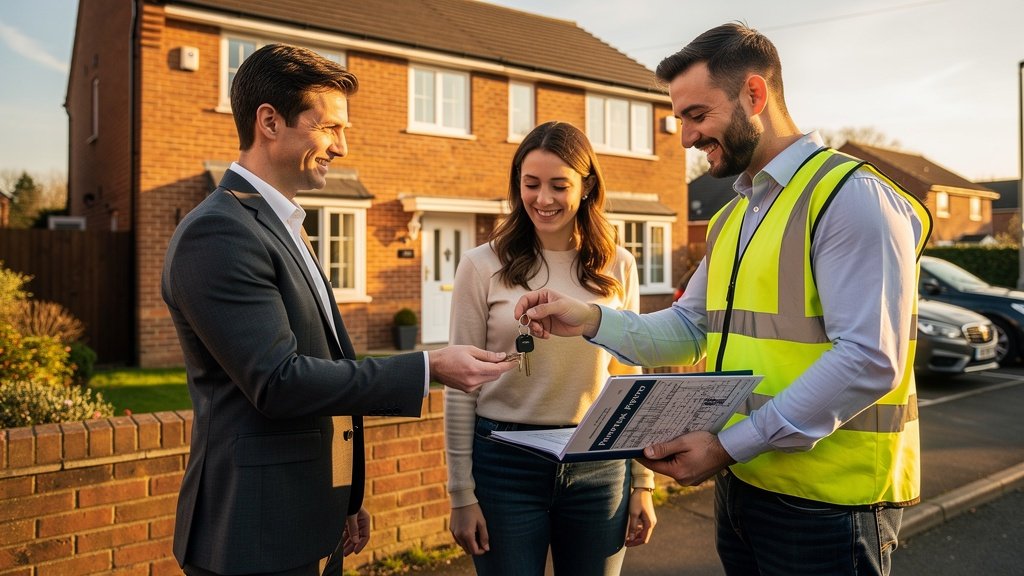
Which Survey Do I Need as a First-Time Buyer?
There are two main survey options for residential property buyers: the RICS HomeBuyer Report (Level 2) and the Level 3 Building Survey. Here's a plain-English guide to choosing between them:
RICS HomeBuyer Report (Level 2)
Best for: modern, conventionally built properties in reasonable condition — typically post-1930 houses and flats that haven't been significantly extended or altered. The HomeBuyer Report uses a traffic-light condition rating system (Condition 1 = fine, Condition 2 = needs attention, Condition 3 = serious issue) and provides a clear summary of any concerns. It's faster to produce than a Level 3 and typically costs £150–£250 less.
Level 3 Building Survey
Best for: older properties (pre-1930), anything that's been extended, altered or converted, unusual construction types (timber frame, barn conversion, listed buildings), and any property where you have specific concerns. If you're buying a Victorian or Edwardian property anywhere in Crowborough or East Sussex, we'd almost always recommend the Level 3. The additional cost is modest compared to the additional protection it provides.
Still not sure? Read our detailed comparison: HomeBuyer Report vs Level 3 Survey: Which Do You Need?
How a Survey Can Actually Save You Money
First-time buyers sometimes hesitate over survey costs because they're already stretched on deposits and legal fees. We completely understand that. But consider this:
- A RICS HomeBuyer Report for a typical Crowborough property starts from around £400–£500
- A Level 3 Building Survey starts from around £600–£750
- Over 60% of Level 3 surveys we carry out identify defects that lead to a price reduction
- The average saving our clients achieve through survey-led renegotiation is £8,200
That's not just anecdote. That's the pattern we've observed over hundreds of surveys across East Sussex and Kent. Even when the survey comes back largely clean, the peace of mind is genuinely worth the fee.
"I was nervous about the cost of a survey on top of everything else. But my solicitor and my parents both said: 'Don't skip it.' The survey found damp in the kitchen extension that the estate agent hadn't mentioned. We got £6,500 knocked off. The survey cost £595. I'm really glad I listened."
The Survey Process: Step by Step for First-Time Buyers
- Get a quote: Contact us with the property address and type. We'll recommend the right survey and give you a fixed fee — usually within 2 hours.
- We arrange access: We liaise with the estate agent directly. You don't need to be there — though you're welcome to join us at the end of the inspection if you'd like to walk through the property with the surveyor.
- The inspection: We carry out a thorough inspection of all accessible parts of the property. For a Level 3, this typically takes 3–5 hours.
- You receive your report: Written in plain English, with photos, prioritised recommendations and (for Level 3) repair cost estimates. Delivered within 3–5 working days.
- We call you: Every client receives a follow-up call from their surveyor to discuss the findings, answer questions and help them decide what to do next.
- You negotiate (if needed): Armed with the survey, you can renegotiate on price or ask the vendor to fix specific issues before exchange. We can help you frame that conversation.
FAQ for First-Time Buyers
Absolutely. A survey report is one of the most powerful negotiating tools available to a property buyer. If the survey identifies significant defects, you can go back to the vendor and ask for a price reduction to reflect the cost of repairs. Most vendors will negotiate if the defects are clearly evidenced — and our reports are written specifically to provide that evidence.
No. Finding serious issues in a survey doesn't automatically mean you should walk away — it means you need to understand the full picture before deciding. We'll explain what we found, what it means, what it's likely to cost to fix, and what we'd do in your position. Sometimes the right answer is to renegotiate. Sometimes it's to request specialist reports. And occasionally, very rarely, it is to walk away. We'll give you an honest view.
For a Level 3 Building Survey, yes — we include comment on garages, outbuildings, retaining walls and boundary structures where they're likely to affect the property value or incur future expenditure. For a HomeBuyer Report, coverage of outbuildings is more limited. We'll confirm what's included when we give you your quote.
New-builds generally come with a developer's warranty (typically NHBC Buildmark) which provides some protection for the first few years. However, a new-build snagging survey — which identifies defects and unfinished items before you complete — can be very valuable. This is a specialist inspection that we offer separately. Ask us about new-build snagging surveys in East Sussex.
Ready to Book Your First Survey?
If you're a first-time buyer in Crowborough, Tunbridge Wells, Uckfield or anywhere across East Sussex, Kent or Surrey, we'd love to help you get this right. Contact us today for a free, no-obligation quote — and let's make sure your first home purchase is a good one.