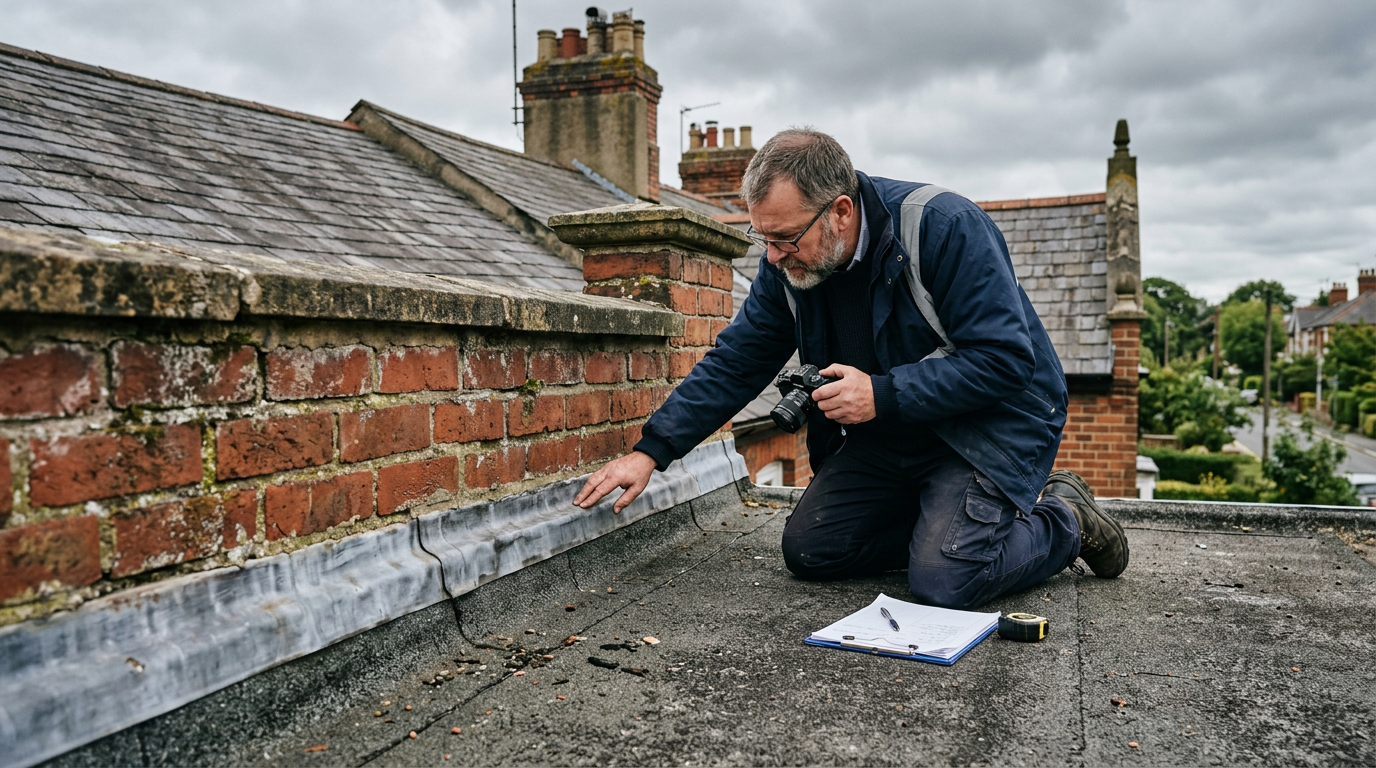
If you are buying a property in East Sussex — or indeed anywhere in the UK — and it has a flat roof, expect your surveyor's report to flag it. Flat roofs are among the most frequently commented-upon elements in building surveys, and not without reason. They are genuinely more prone to failure than pitched roofs, and when they fail, the results can be severe: water ingress, rot, mould, and expensive remedial work. But flat roofs are not automatically a disaster — and modern flat roof systems, installed and maintained correctly, can perform excellently for decades.
I am Robert Ashley, a building surveyor based in Crowborough. In this guide I want to explain the reality of flat roofs — the good, the bad, and the ugly — so that you can make an informed decision when buying or maintaining a property.
Types of Flat Roofing in East Sussex Properties
Before discussing defects, it helps to understand the main types of flat roofing you are likely to encounter in East Sussex properties, because the type significantly affects expected lifespan and likely defects.
Traditional Felt (3-layer)
Most common on pre-1990s extensions and outbuildings. Prone to cracking, blistering and lifting at edges. Inexpensive but short-lived.
Modified Bitumen (Torch-on)
Improved performance over traditional felt. Still susceptible to lap failures and edge detachment. Common on 1980s–2000s construction.
EPDM Rubber
Single-ply synthetic rubber membrane. Excellent flexibility, good UV resistance. Increasingly common since 2000s. Joints are the main vulnerability.
GRP Fibreglass
Very durable and seamless. Popular for smaller roofs and dormers. Can crack if substrate moves. Generally excellent performance.
Lead
Traditional material — very long-lasting if correctly installed. Used on period properties, porches, bay windows. Expensive but excellent when sound.
Liquid Applied Systems
Modern seamless application. Very good performance on complex geometries. Growing in popularity for refurbishments.
The Most Common Flat Roof Defects
In a typical building survey, flat roofs generate more observations than almost any other building element. Here are the defects I encounter most frequently:
-
Ponding Water
Poor falls (inadequate slope) cause water to pond on the roof surface. Even a small amount of standing water accelerates membrane degradation, blocks outlets, and adds structural load. A correctly laid flat roof should have a minimum fall of 1:80 — approximately 1cm per 80cm of run.
-
Blistering and Bubbling
Blistering in felt and bitumen membranes occurs when moisture is trapped beneath the surface and expands in warm weather. Blisters are vulnerable to puncture and indicate the membrane is failing. They are very common on older felt roofs.
-
Edge and Lap Failures
The most common source of water ingress. Membrane laps that have not been properly bonded, or edge details that have lifted away from the upstand or parapet, allow water to penetrate between the layers and into the structure below.
-
Cracking at Junctions
Where the flat roof meets a wall or parapet, thermal movement and differential settlement can cause the membrane to crack or pull away. Lead flashings at these junctions are particularly vulnerable and are a very common finding in surveys of older properties.
-
Blocked or Absent Outlets
Flat roofs must drain efficiently. Blocked outlets or poorly positioned drains cause water to back up and find alternative routes — usually through the membrane or into the wall. In East Sussex's wet winters, this is a particularly common cause of internal water damage.
-
Lack of Insulation
Many flat roofs on pre-2000 properties are "cold roofs" — insulation below the deck rather than above. This leads to condensation on the underside of the deck, which gradually rots the timber structure. Modern flat roofs should be "warm roof" construction with insulation above the deck.
What Your Surveyor Will Tell You
When I inspect a flat roof during a building survey, I check condition from ground level (using binoculars), from ladder or access hatch where safe access is available, and from inside the building directly below. I look for:
- Evidence of ponding — tide marks, algae growth, debris accumulation
- Condition of the membrane — blistering, cracking, lap integrity, edge details
- Condition of flashings — lead weeping, pointing failure, lifted flashings
- Falls — can standing water escape quickly?
- Outlets and drainage — clear, correctly positioned, properly sealed
- Internal evidence of water ingress — staining on ceilings, damp readings in walls
- Timber deck condition — visible deflection, soft spots, evidence of rot
In my report, flat roof defects are graded. A roof at end of life or actively leaking will receive a Condition 3 rating (urgent action required). A roof nearing end of life with no current defects may receive Condition 2 (repairs needed in near future). A recently renewed roof in good condition may receive Condition 1.
Flat Roof Repair and Replacement Costs
| Work | Approximate Cost (2025) | Notes |
|---|---|---|
| Patch repair (small area) | £200–£500 | Temporary; only suitable for isolated defects in otherwise good membrane |
| Full re-felt (traditional) | £40–£70/m² | Inexpensive but short lifespan (10–15 yrs) |
| EPDM rubber membrane | £60–£100/m² | Good lifespan; suitable for most domestic applications |
| GRP fibreglass system | £70–£120/m² | Excellent for smaller areas; very durable |
| Lead flat roof | £150–£250/m² | Premium cost; very long lifespan; requires specialist installation |
| Warm roof upgrade (insulation) | £30–£50/m² additional | Add to any full replacement for Building Regulations compliance |
When negotiating on a property with a flat roof nearing end of life, use the cost of full replacement (plus any structural deck repairs) as a negotiating tool. On a typical rear extension with a 30m² flat roof, a full GRP replacement including warm roof upgrade could cost £3,000–£5,000 — a reasonable price reduction to request from the vendor.
Are Modern Flat Roofs Reliable?
There is a widespread misconception that flat roofs are inherently unreliable. This myth dates from the 1960s–1980s, when large numbers of low-quality flat roofed extensions and bungalows were built with poorly specified felt that failed after a decade or less. Modern flat roofing systems — properly specified and installed — are a different proposition entirely.
A GRP fibreglass flat roof installed by a reputable contractor on a correctly prepared warm roof substrate, with properly detailed outlets and upstands, should give 25–40 years of trouble-free service. EPDM rubber systems from reputable manufacturers such as Firestone or Carlisle come with 20-year manufacturer warranties when properly installed. These are not short-term compromises — they are genuine long-term solutions.
The key variables are: specification quality, installation quality, and ongoing maintenance. The first two are largely a function of using a reputable contractor with experience in the specific system. The third — maintenance — means keeping outlets clear of debris and having the roof checked every five years or so.
Frequently Asked Questions About Flat Roofs
Should I be worried if a property I'm buying has a flat roof?
Not necessarily. The key question is the type of membrane, its age, and its current condition. A recently renewed GRP or EPDM flat roof in good condition is not a concern. An old felt roof nearing the end of its life is a short-term maintenance liability that should be factored into your purchase price. Your surveyor's report will tell you which category the roof falls into.
Can I get a mortgage on a property with a flat roof?
Most lenders will mortgage properties with flat roofs on extensions or outbuildings without issue. Properties where more than a third of the roof area is flat may be flagged by some lenders. If your mortgage is declined on flat roof grounds, it is worth checking whether the flat roof can be replaced with a modern pitched roof or warm roof system before reapplying. A RICS mortgage valuation report that comments positively on a recently renewed flat roof can help reassure lenders.
How often should a flat roof be inspected?
Once a year is a sensible minimum — ideally in autumn before the wet season. Check that outlets are clear, flashings are sound, and there is no visible ponding or membrane damage. A professional inspection every five years or so will identify early-stage defects before they become water ingress problems. Immediate inspection is warranted after any unusually severe weather event.
Is a warm roof better than a cold roof?
Yes, in almost all cases. A warm roof — where the insulation is above the structural deck — prevents the deck from experiencing freezing temperatures and eliminates the risk of interstitial condensation (moisture condensing inside the roof construction). Cold roofs are still permissible but require carefully designed ventilation, which is often inadequate in practice. Any flat roof replacement in East Sussex should ideally be to warm roof specification.
My surveyor has said the flat roof is Condition 3. What does that mean?
Condition 3 in an RICS survey report means the element requires urgent attention or investigation. For a flat roof, this typically means the roof is either actively leaking, at immediate risk of failure, or has defects likely to cause serious damage if not addressed promptly. You should obtain quotes for replacement before proceeding with the purchase and use these to negotiate on price.
The Bottom Line on Flat Roofs
A flat roof on a property you are buying does not have to be a dealbreaker — but it does need careful assessment. The age, type, and condition of the membrane determine whether you are looking at a long-term asset or a short-term liability. Always ensure your building survey includes a careful assessment of any flat roof areas and ask your surveyor to specify the type of membrane, its approximate age, and estimated remaining life.
At Crowborough Surveyor, our building surveys include detailed assessment of all roof coverings, including comprehensive inspection of flat roofs across East Sussex. Contact us for a free quote.
Concerned About a Flat Roof?
Our building surveys cover flat roofs in full detail. Get a professional assessment before you buy.
Book a Building Survey