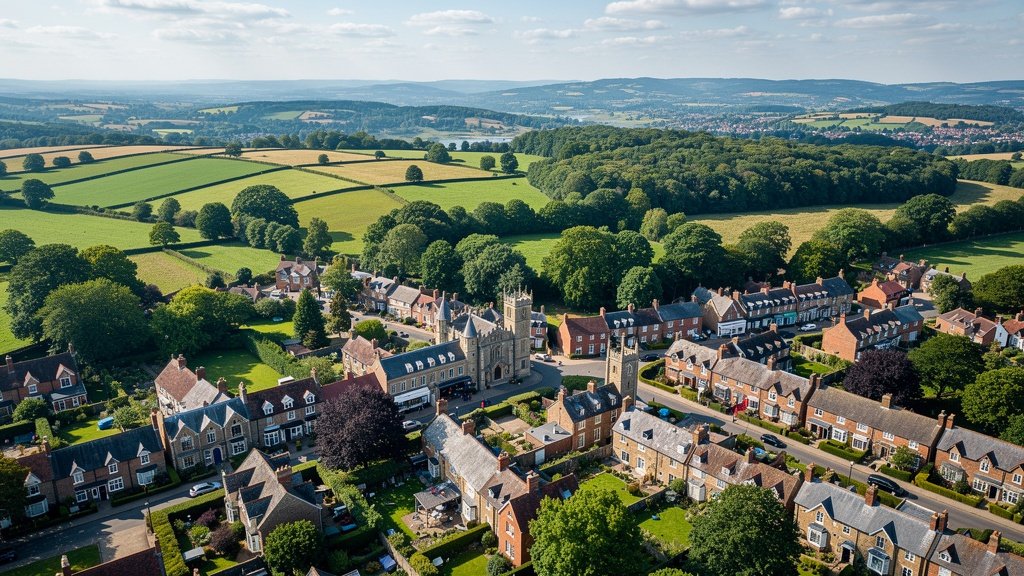
East Sussex is home to thousands of listed buildings — from thatched cottages on the edge of Ashdown Forest to Georgian townhouses in Lewes and medieval farmhouses scattered across the High Weald. Buying one can be enormously rewarding. But it also comes with responsibilities, restrictions and risks that many buyers simply aren't prepared for.
In this guide, our building surveyors explain exactly what you need to know before you commit — including why a specialist survey is absolutely essential, what it will uncover, and how to avoid the costly mistakes we see buyers make every year.
Key Facts at a Glance
- There are over 5,700 listed buildings in East Sussex
- Listed Building Consent (LBC) is required for most alterations — even internal ones
- Unauthorised works are a criminal offence with unlimited fines
- Repair and maintenance costs for listed buildings are typically 20–40% higher than equivalent unlisted properties
- A Level 3 Building Survey is the minimum recommended survey for any listed building purchase
What Does "Listed" Actually Mean?
A listed building is one that appears on the National Heritage List for England (NHLE), maintained by Historic England. Listing indicates that a building is of special architectural or historic interest and is therefore protected by law under the Planning (Listed Buildings and Conservation Areas) Act 1990.
There are three grades of listing:
- Grade I — Buildings of exceptional interest. Only around 2% of all listed buildings fall into this category.
- Grade II* (pronounced "two star") — Particularly important buildings of more than special interest. Around 5–6% of listed buildings.
- Grade II — Buildings of special interest. The vast majority (around 92%) of listed buildings are Grade II.
In East Sussex, the majority of listed buildings buyers encounter will be Grade II, though there are significant numbers of Grade II* and Grade I properties in areas like the Weald, Lewes and Rye.
What Listing Means for You as a Buyer
This is the area where buyers most often come unstuck. Many assume that listing only restricts what they can do to the outside of the building. In reality, listing protects the entire building — inside and out — including fixtures, fittings, outbuildings, and in some cases garden walls and gates.
Listed Building Consent (LBC)
Before carrying out any works that would affect the character of a listed building, you must apply for Listed Building Consent from your local planning authority (in East Sussex, this is typically Wealden District Council, Lewes District Council, or East Sussex County Council, depending on your location).
This applies to works that in an unlisted building would not require any permission at all — things like:
- Replacing windows or doors (even like-for-like)
- Removing internal walls or partitions
- Replacing roof coverings or guttering
- Installing a new kitchen or bathroom
- Re-pointing brickwork or stonework
- Insulating walls, floors or roofs
- Installing solar panels or air source heat pumps
Important: Unauthorised Works
If a previous owner carried out works without consent, the liability passes to you as the new owner. There is no statute of limitations for listed building enforcement — the council can require you to reinstate the original fabric at any time, regardless of when the works were carried out. This is one of the most important things a specialist survey will check for.
Why a Specialist Survey is Non-Negotiable
A standard mortgage valuation will not identify most of the issues relevant to a listed building purchase. Even a basic RICS HomeBuyer Report (Level 2) may not go into sufficient depth for an older, complex historic property. For any listed building, we strongly recommend a Level 3 Building Survey — ideally carried out by a surveyor with specific experience of historic and period properties.
Here is what a thorough survey of a listed building should cover:
1. Structural Condition
Historic buildings were often built using techniques and materials very different from modern construction — lime mortar, solid masonry walls, timber frames, handmade bricks and clay tiles. A surveyor experienced with listed buildings will understand how these materials age and fail, and will identify structural problems that a surveyor unfamiliar with historic construction might miss or misinterpret.
2. Unauthorised Alterations
We frequently encounter listed buildings where previous owners have made alterations without obtaining Listed Building Consent. Common examples include: replacement uPVC windows (which are almost never acceptable in a listed building), removal of chimney stacks, lowered ceilings concealing original timber beams, modern render over original lime-plastered walls, and extensions built without consent.
Your surveyor should flag any alterations that appear to lack consent and recommend that your solicitor investigates the planning history before exchange.
3. Damp, Decay and Timber Defects
Older listed buildings are far more susceptible to damp-related problems than modern buildings, and the consequences can be severe — wet rot, dry rot, beetle infestation and structural deterioration. However, it is equally important to understand that some moisture movement is normal and expected in a traditional building, and an inexperienced surveyor may over-report minor moisture readings as serious defects.
Our surveyors have extensive experience distinguishing between genuine damp problems requiring urgent remediation and normal seasonal moisture variation in solid-walled historic buildings.
4. Services and Energy Performance
Listed buildings are generally exempt from the highest EPC ratings, but that doesn't mean energy efficiency isn't a consideration. Many older listed buildings have outdated electrical installations, lead pipework, cast iron heating systems and inadequate insulation. The survey should comment on the condition and approximate age of all major services.
5. Repair and Maintenance Liabilities
One of the most valuable things a Level 3 survey provides is a clear picture of the likely cost of repairs. For a listed building, this is particularly important because you are often restricted in what materials and methods you can use, which means you cannot simply use the cheapest available contractor or material. Traditional lime mortars, specialist timber repairs, handmade clay tiles and skilled conservation-specialist contractors all cost significantly more than their modern equivalents.
The Most Common Issues We Find in East Sussex Listed Buildings
After surveying hundreds of historic and listed properties across East Sussex, Kent and Surrey, these are the defects we encounter most frequently:
- Inappropriate modern pointing — Hard cement mortar applied over original soft lime joints, causing moisture to become trapped and leading to spalling of the masonry face.
- Roof structure deterioration — Many East Sussex farmhouses and cottages have complex, hand-cut timber roof structures dating back centuries. Woodworm, wet rot and distortion are common in properties that haven't been regularly maintained.
- Rising and penetrating damp — Solid-walled buildings without modern damp-proof courses are vulnerable, particularly where ground levels have risen around the base of the building.
- Settlement and movement — Clay soils in the Weald and Ashdown Forest area are prone to seasonal shrinkage and swelling, leading to foundation movement and cracking.
- Lead and asbestos — Older buildings may contain lead paint, lead pipework and, in some cases, asbestos-containing materials in later additions or service installations.
- Unapproved alterations — As mentioned above, this is extremely common and creates significant legal and financial risk for buyers.
What Does It Cost to Survey and Maintain a Listed Building?
Survey fees for listed buildings are typically slightly higher than for equivalent modern properties, reflecting the additional complexity and time involved. As a general guide:
- Level 3 Building Survey for a listed property in East Sussex: from approximately £750–£1,200+ depending on size and complexity
- Specialist historic building report (if required): varies significantly
This investment is modest compared to the potential costs of buying a listed building with undisclosed problems. In our experience, the survey fee pays for itself many times over in the majority of listed building purchases — either through price renegotiation or by identifying problems that allow the buyer to make an informed decision.
On the maintenance side, budget for higher-than-average ongoing costs. A general rule of thumb is to set aside around 1–2% of the property value per year for maintenance and repair — more for a property in poor condition.
Practical Tips Before You Buy
- Check the listing description — The full listing description is available on the Historic England website. Read it carefully: it defines exactly what is protected and why.
- Review the planning history — Ask your solicitor to obtain the full planning history from the local authority before exchange. Look for any enforcement notices, applications for LBC, or complaints.
- Commission a Level 3 survey early — Don't wait until after you've had an offer accepted. Commission the survey as soon as possible so you have time to investigate any issues before exchange.
- Budget realistically — Factor in higher repair, maintenance and heating costs in your affordability calculations.
- Speak to the local conservation officer — Most local planning authorities have a conservation officer. A brief conversation before you commit can clarify what you will and won't be able to do with the property.
- Use a specialist solicitor — Not all conveyancing solicitors are equally experienced with listed buildings. A solicitor who regularly deals with historic properties will know the right questions to ask.
"The most common mistake we see is buyers assuming that because they've owned a period property before, they understand listed buildings. The planning and legal constraints are genuinely different — and the consequences of getting it wrong can be very costly."
— James Hollingsworth, Principal Surveyor, Crowborough Surveyor
Why Local Expertise Matters in East Sussex
East Sussex has a highly varied building stock — from Wealden hall houses and tile-hung farmhouses in the High Weald to flint-faced cottages on the South Downs and Georgian terraces in the market towns. Each building type has its own particular vulnerabilities and maintenance requirements, and understanding them requires local knowledge built up over years of surveying in the area.
Our surveyors have been working across Crowborough, Tunbridge Wells, Uckfield, East Grinstead, Lewes and the surrounding countryside for over 15 years. We understand the local soils, the typical construction methods, the common defects and the local planning context — and we bring all of that to every survey we carry out.
Ready to Commission a Survey on a Listed Building?
If you're considering buying a listed building in East Sussex, Kent or Surrey, we'd be delighted to help. We carry out Level 3 Building Surveys on all types of historic and listed properties, with clear, plain-English reports that give you everything you need to make an informed decision.
Contact us today for a free, no-obligation quote. We typically respond within two hours on working days.